Exhibition Schalen with Larissa Heim

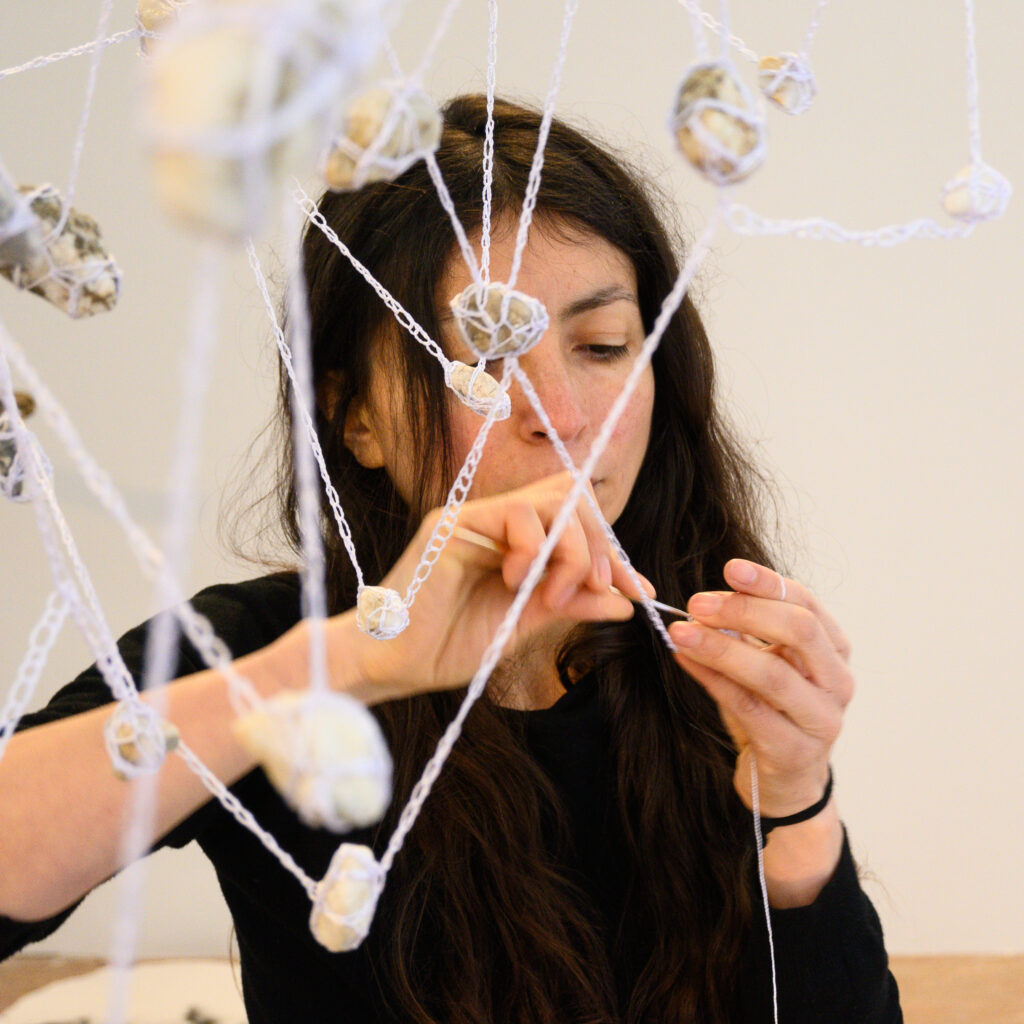
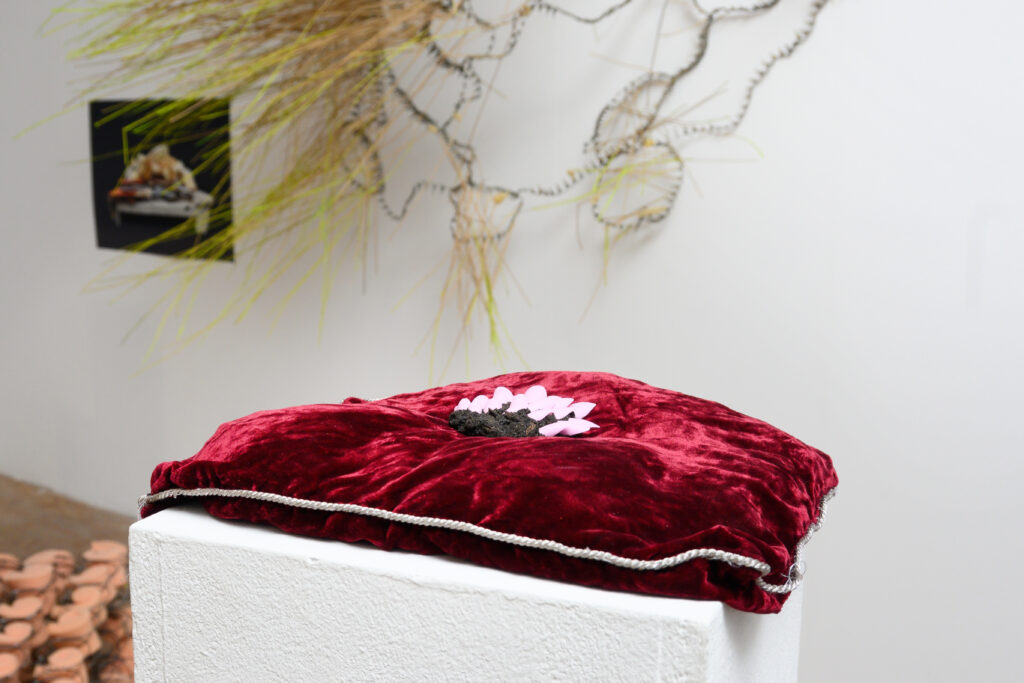
The exhibition “Schalen” [“shells”] shows the human effect on natural environments by combining building materials with organic substances. The origin of the works lies in a garden project in which an overgrown plot of land was extensively cut back and structurally altered. What remains are the relics and findings of this intervention, which can be experienced as an expansive installation.

Larissa Heim is studying at the Academie of Fine Arts in Stuttgart with Prof. Alisa Margolis
(among others).

The exhibition ends with a closing event on December 6, 2024 from 7 pm.
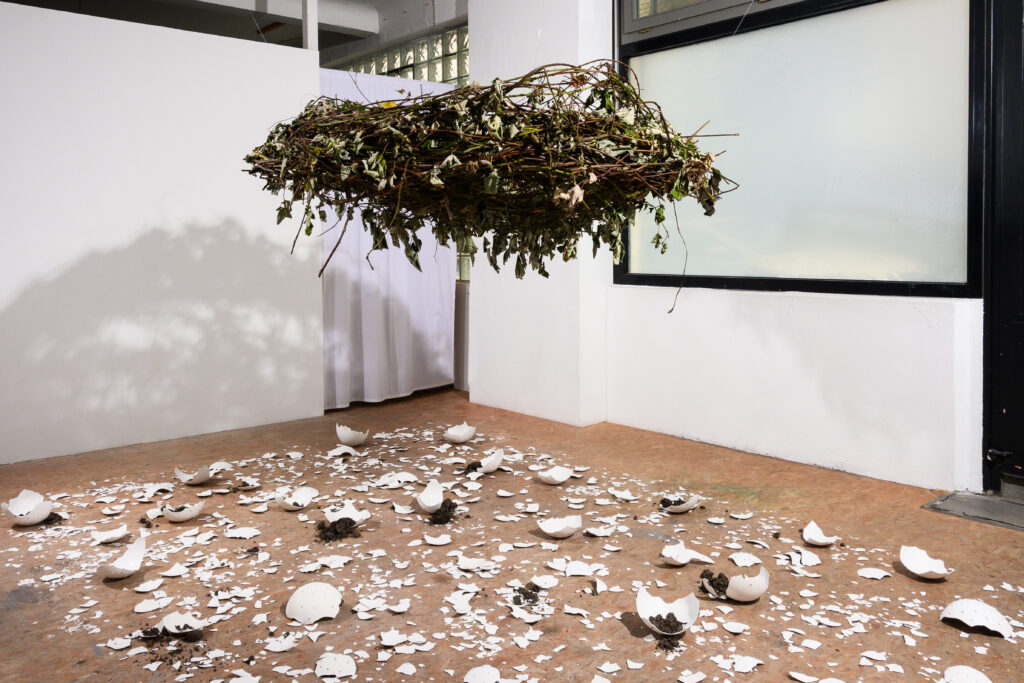
Photo Credits Ulrike Reichart, 2025
Wet Relations

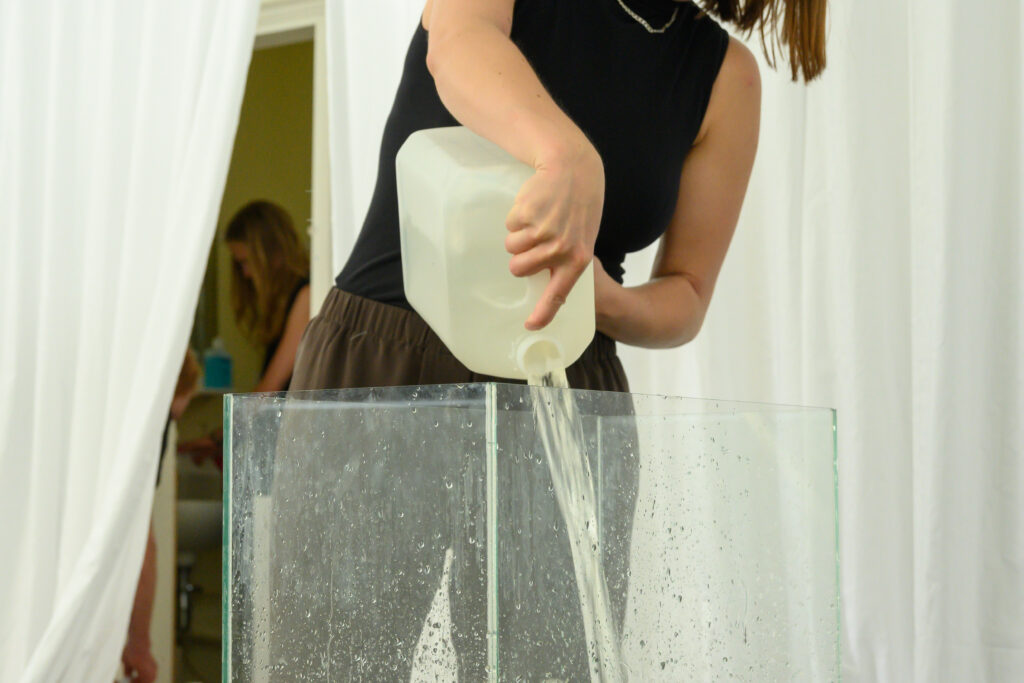
Water is not only one of the most important resources and a prerequisite for all life, it is also a connecting element. Wet Relations (concept and design by Beatrice Bucher and Sonja Schwarz) establishes an intimate and direct connection between us and the Neckar river with its interactive installation and reports on different relationships between human and non-human bodies of water in a lecture performance (read by Jana Rzehak).

The project is a format of  the neckarinsel e.V. In addition to the exhibition, the association will be presenting its work.

Further program:
Friday, July 12, 2024, open from 2-4 pm
Saturday, July 13, 2024, 4-5 pm & 6-7 pm
Sunday, July 14, 2024, 2-3 pm

The filtered Neckar water can be drunk using the glass bowls.
Tasting bowls for sampling. Brochure to take with you.

Compost of Newborns

Opening on Friday, April 19, 2024 at 7:30pm with a performance and introduction by Luzi Gross (Cultural scientist, Art educator, Curator). The exhibition is on view until May 17, 2024.

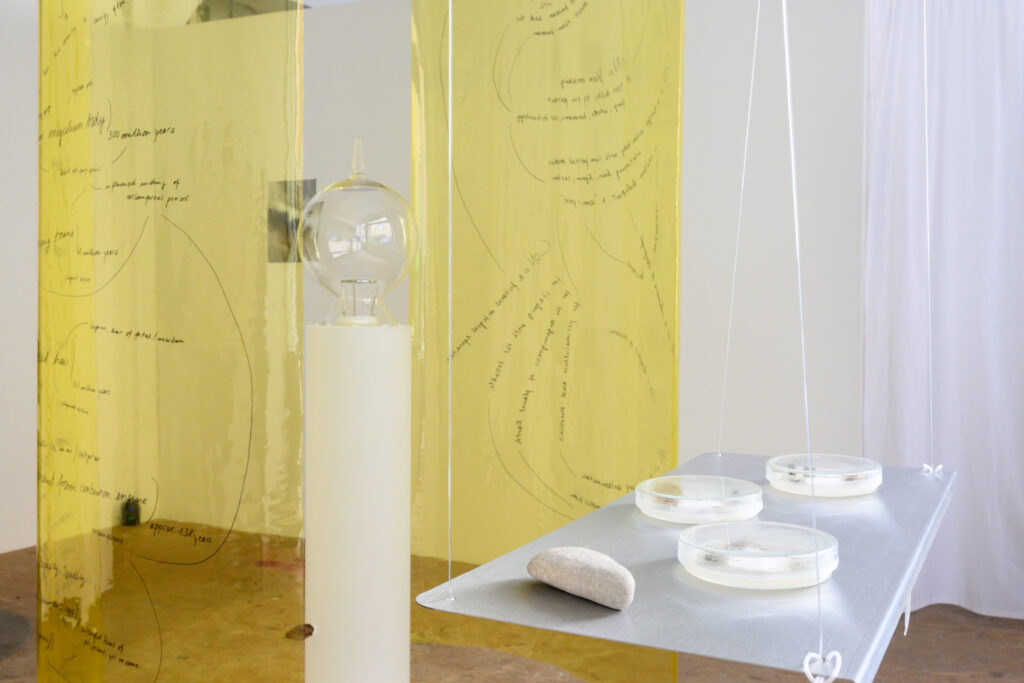
The exhibition is a sci-fi experiment with the fungus Ganoderma applanatum as its main agency. In reference to Stuttgart, the artist has brought the exhaust soot of a Daimler E-Class, her hair, and wood from a forest in relation with the finest hyphae of the fungus. In the laboratory, the fungus has woven a new kind of microbiome that emerges as a multispecies from fungi, tree, car and humankind. The artist repeats the experiment in a performance with the participation of visitors at the opening.

Further Composts of Newborns will emerge during the exhibition period under the climatic conditions of the project space.

The exhibition ends on May 17, 2024 at 7 p.m. with a conversation with the artist together with the mycologist J. Philipp Benz (TU Munich).

La Caida

The artist starts the thread winder at 11 am, the process of the falling stones can be seen until 11 pm. Introduction by Dr. Verena Jendrus at 5 pm.The exhibition can be seen until April 5, 2024.

An installation with floating stones can be seen in the exhibition with the title La Caida. All the stones are connected to each other by a thread, which is released by a thread winder. The stones gradually fall onto a metal plate. The falling of the stones is reminiscent of the ticking of a clock; time seems to pass, to run out, possibly even the time we have available to us to herald a change for our climate. What remains is the sound of the stones, which can be heard in the space as a sound installation.

Another work developed by the artist especially for the art space is a drawing created by drops of water. In this case Viviana González Méndez extends her personal space from Baden, her home in Switzerland, to Stuttgart to the river Neckar.

Photo Credits: Ulrike Reichart, 2024

Kohlenstoff-Nährstoff-Schaumstoff-Kreislauf / Carbon nutrient-foam cycle

Renate Liebel
December 8, 2023 – January 5, 2024

Renate Liebel is a visual artist who explores man-made and naturally grown systems, thinking primarily about plants and their connection to relics of civilization. Her work includes installations in the open field, still lifes and objects of plants that do not (yet?) exist, graphic sketches, videos and friendly care processes.
For the exhibition, she made a trip to the University of Hohenheim, Department of conversion technologies of renewable materials into the production of bio-based plastics. Inspired by the carbon and nutrient cycles, drawings of fictitious plant-machine hybrids were created that hybrids that can incorporate microplastics and other synthetic materials into metabolic metabolic processes.
In addition, experiments with soil as a modeling material and an artistic look at the mattress that has been left lying in the forest and has been given a new life over the years.

Photo Credits: Ulrike Reichart, 2024